Purpose over packaging

Walk down any aisle in any supermarket or pharmacy and count how many products you actually see. Not glance at. See. Register. Feel something about.
The number is smaller than you'd think. And the ones you do notice aren't winning by accident.
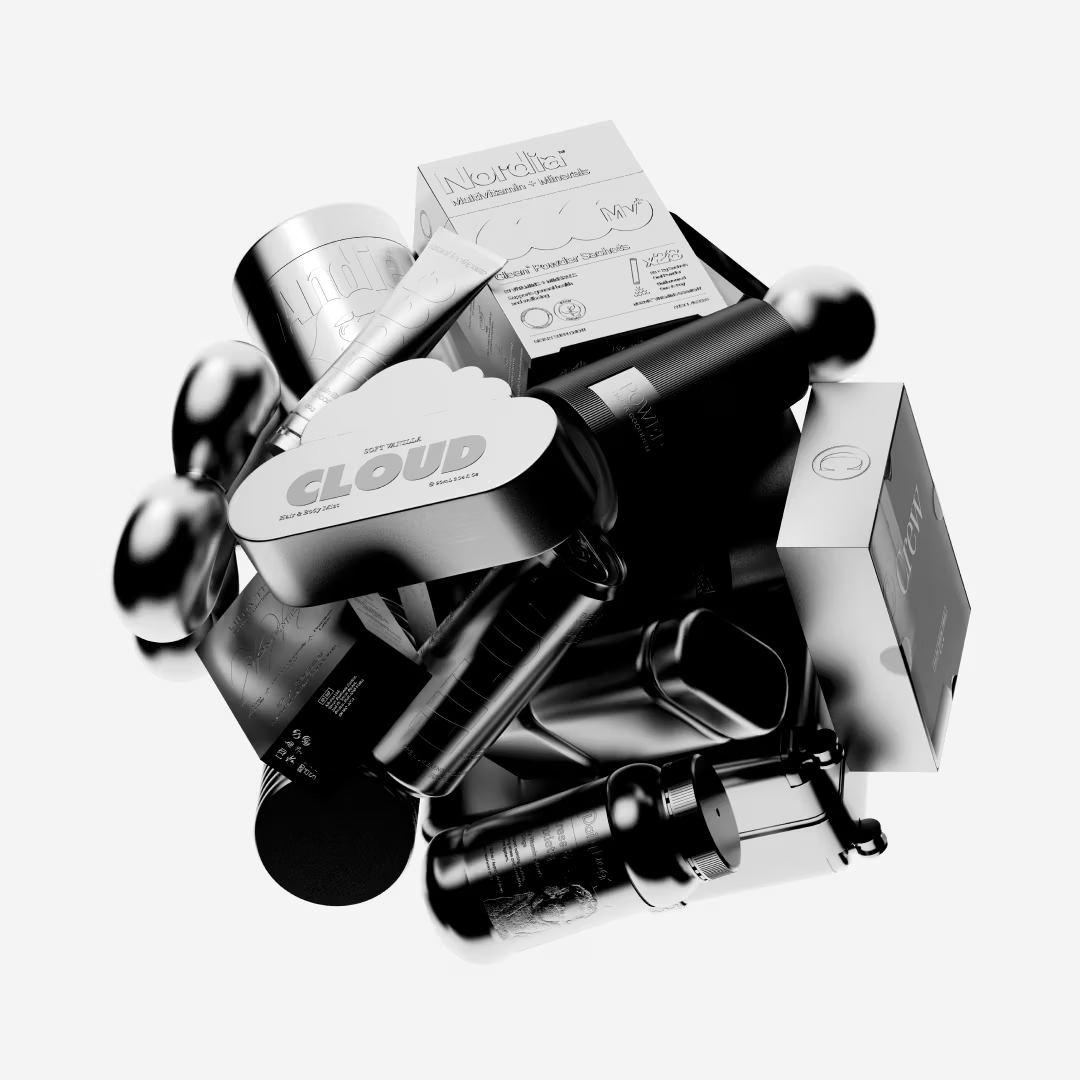
Packaging is the most underestimated brand asset in retail.
For most consumer goods brands, packaging is the primary brand touchpoint. It's the moment the brand and the consumer meet in the real world. No algorithm, no media buy, no influencer between them. Just the product, the shelf, and a fraction of a second to make an impression.
And yet packaging is consistently treated as the last decision. The container the product goes in. The thing that gets designed when everything else is sorted. The brief that arrives with a fixed die-line, a locked-in cost constraint, and a two-week timeline.
That's a profound misunderstanding of what packaging actually is.
Every inch is working for or against you.
A pack has a front, a back, sides, a top, a bottom. In most categories, the consumer will only see one face of it on shelf, and that face has perhaps two seconds to communicate who this brand is, what it does, and why it should be chosen over everything around it.
Two seconds. Every element on that face, the hierarchy, the colour, the typography, the imagery, the finish, is either earning that moment or wasting it.
And then the consumer takes it home. They use it. They look at the back. They open it. They put it in their bathroom or their kitchen or their bag. Every one of those interactions is a brand experience. Every one of them is either reinforcing the brand or eroding it.
But packaging is just the beginning.
The most important shift in thinking about packaging isn't about making it look better. It's about understanding that great packaging is the beginning of a brand world, not the end of one.
The brands that win don't treat the pack as a container. They treat it as a portal. The first touchpoint in an experience that extends into the home, online, in conversation, in memory. The pack sets the tone for everything that follows. The unboxing, the ritual of use, the way someone feels when they reach for it the second time.
Purpose over packaging means asking not just what the pack looks like, but what world it opens the door to. What feeling does it create? What does it say about the person who chose it? Where does the brand go after the shelf?
Answer those questions first. Then design the pack.
The shelf is a starting point.
The brands with the most powerful packaging aren't just winning on shelf. They're winning everywhere the brand shows up, because the packaging established a visual and emotional language strong enough to travel.
That's the standard to design for. Not "does it stand out in the fixture", though it must. But "does it create a world that people want to be part of?"
Because the brands that answer yes to that question don't just get chosen. They get loved.