Own the category

Look at any retail category long enough and a pattern emerges. The same colour palette. The same claims hierarchy. The same visual language, passed between competitors like a hand-me-down nobody thought to question.
Everybody looks like everybody. And in trying not to stand out, they've made the worst possible decision. They've made themselves invisible.
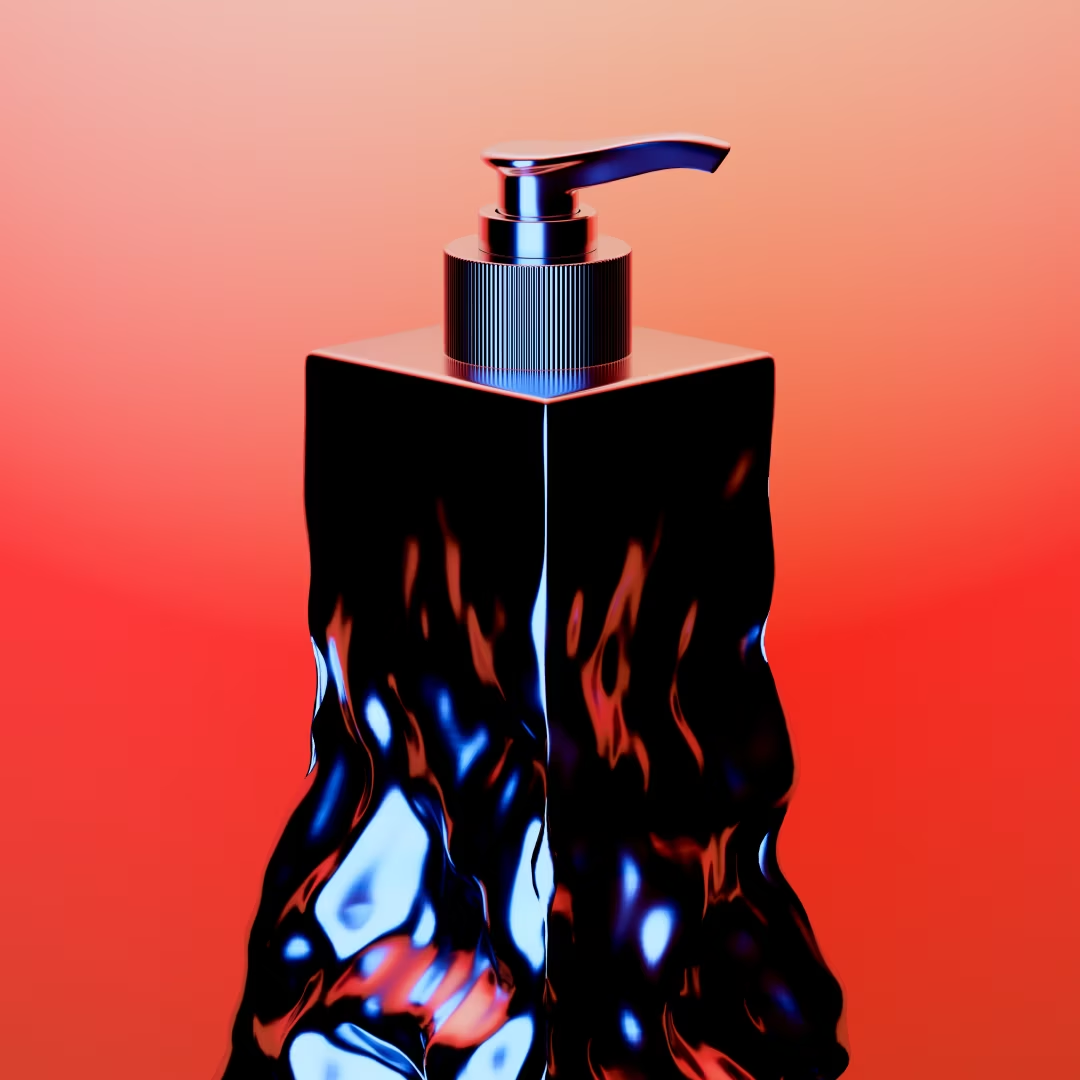
The category is not your friend.
There's a well-worn logic in FMCG that says you need to look like the category to be trusted by it. That consumers need familiar visual cues to know what shelf to find you on, what you do, why you belong.
There's some truth in this. But it's been taken so far that most categories are now a sea of sameness, where the only thing differentiating one product from the next is a marginal shade difference and a slightly bolder claim.
In that environment, being different isn't a risk. It's the only viable strategy. Because the brand that looks like nothing else in the fixture is the one that gets noticed, gets remembered, and gets reached for, even by someone who's never bought it before.
The ROCC Effect.
At DOB, we talk about what we call the ROCC Effect. The idea that the most powerful position for any brand in any category is to be genuinely, unmistakably new within it. Not just different for the sake of it, but different in a way that redefines what the category can look and feel like.
Think about the brands that changed the categories they entered. They didn't look like the competition. They didn't borrow the visual language of the established players. They arrived looking like nothing that had come before, and in doing so, they made everything around them look like it was trying too hard to belong.
That's the power of being the odd one. You don't just stand out. You shift the frame. You make the category come to you.
Different has to mean something.
Being different for its own sake is just noise. A brand that stands out visually but has nothing to say is interesting for a moment and forgotten just as fast.
The brands that own their categories are different in a way that means something. Where the visual distinctiveness is an expression of a genuine point of view, a real belief about the consumer, a clear and confident declaration of what this brand is and who it's for.
That combination, distinctive and meaningful, is what creates category leadership. Not the loudest colour on shelf. The clearest identity in the aisle.
Own the odd. Own the category.
The brands we admire most didn't ask for permission to be different. They didn't test their way to distinctive. They made a bold creative and strategic decision, executed it with conviction, and trusted that the right consumer would respond.
That's a harder brief to write and a braver decision to make. But the brands on the other side of that decision don't just stand out. They stand for something. And the ones that stand for something are the ones that own the category for years.